704-844-2943
AVAILABLE FOR EMERGENCIESThe Science of Strength: How Fluoride Actually Repairs Tooth Enamel
Did you know that something as simple as fluoride can help reverse tooth decay? It’s a powerful element in dental care, and its impact on your tooth enamel can make all the difference when it comes to maintaining a healthy, strong smile. Tooth enamel is your first line of defense against cavities, and keeping it in top condition is essential for preventing tooth decay.
In this blog, we’ll dive into the fascinating science behind fluoride and how it helps repair and strengthen tooth enamel. You’ll learn about the role of fluoride in protecting your teeth, how it helps repair damage, and why it’s an essential part of your daily oral care routine.
By the end, you’ll understand why fluoride is often referred to as “nature’s cavity fighter” and how it can support your dental health, especially when combined with professional care at First-In-Smiles Dentistry.
What is Tooth Enamel?
Tooth enamel is the outermost layer of your teeth, and it serves as a shield against the daily wear and tear from food, drink, and even your own habits like chewing and grinding. It is the hardest substance in the human body, even harder than bone, but despite its strength, enamel can wear down over time.
The primary function of enamel is to protect the softer, more vulnerable layers of your teeth beneath it. It provides a barrier against cavities by preventing bacteria and acids from reaching the underlying dentin. Enamel also helps to protect your teeth from temperature changes, which is why you may experience tooth sensitivity when the enamel is worn down.
However, tooth enamel isn’t invincible. Daily exposure to sugary foods and drinks, acid from beverages like soda or coffee, and plaque buildup can cause enamel erosion over time. Once enamel is damaged, it doesn’t regenerate naturally. That’s where fluoride comes into play.
Common enamel problems include:
- Enamel erosion: When acids and sugars break down enamel over time, leading to weaker, thinner enamel.
- Cavities: Areas of the tooth where enamel has been significantly worn down, allowing decay to set in.
- Tooth sensitivity: Thinning enamel can expose the sensitive dentin beneath, leading to discomfort when eating hot or cold foods.
Understanding how enamel works and the challenges it faces will help you appreciate the importance of fluoride in protecting and repairing your enamel.
The Role of Fluoride in Enamel Protection
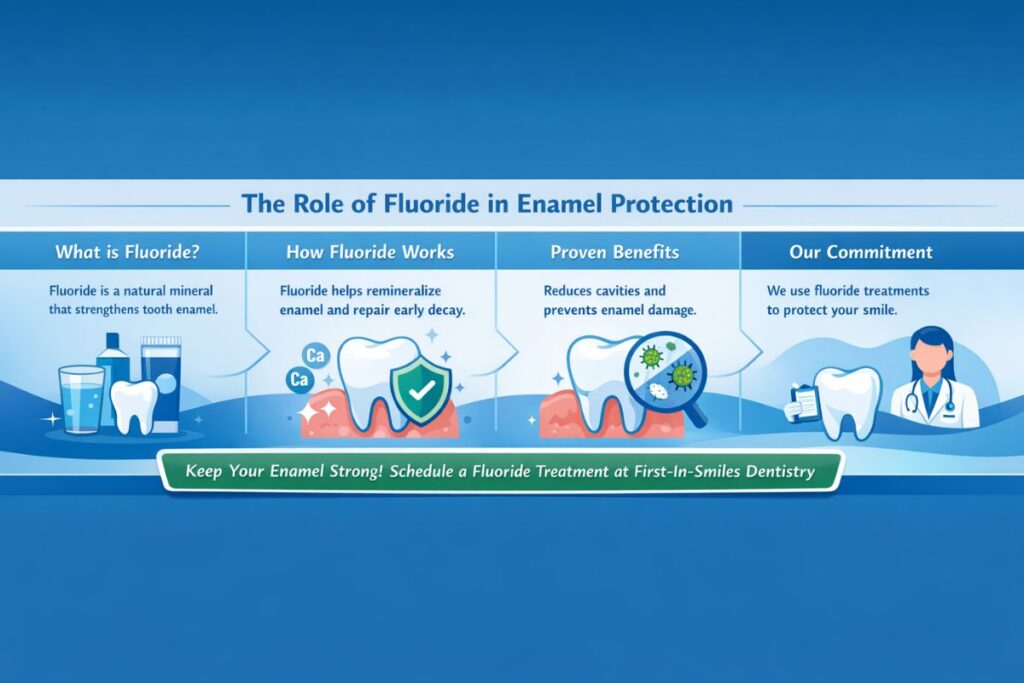
Fluoride is a naturally occurring mineral that has long been recognized for its ability to strengthen and protect tooth enamel. It’s commonly found in drinking water, toothpaste, and professional dental treatments.
Fluoride works by participating in a process known as remineralization, which helps to restore lost minerals in the enamel that are critical to its strength.
How does fluoride work?
When fluoride comes into contact with your enamel, it helps to remineralize areas where minerals, like calcium and phosphate, have been lost due to acid exposure. This process strengthens the enamel and makes it more resistant to future acid attacks. Fluoride can even reverse the early stages of tooth decay by promoting the growth of stronger, more resilient enamel crystals.
Scientific evidence supports the effectiveness of fluoride in preventing and even repairing damage to tooth enamel. Studies from the American Dental Association (ADA) and the Centers for Disease Control and Prevention (CDC) confirm that fluoride significantly reduces the incidence of cavities by remineralizing enamel and preventing decay.
At First-In-Smiles Dentistry, we incorporate fluoride treatments in Matthews as part of a comprehensive approach to oral care, ensuring that your enamel is protected from decay and remains strong for years to come.
How Fluoride Repairs Damaged Enamel
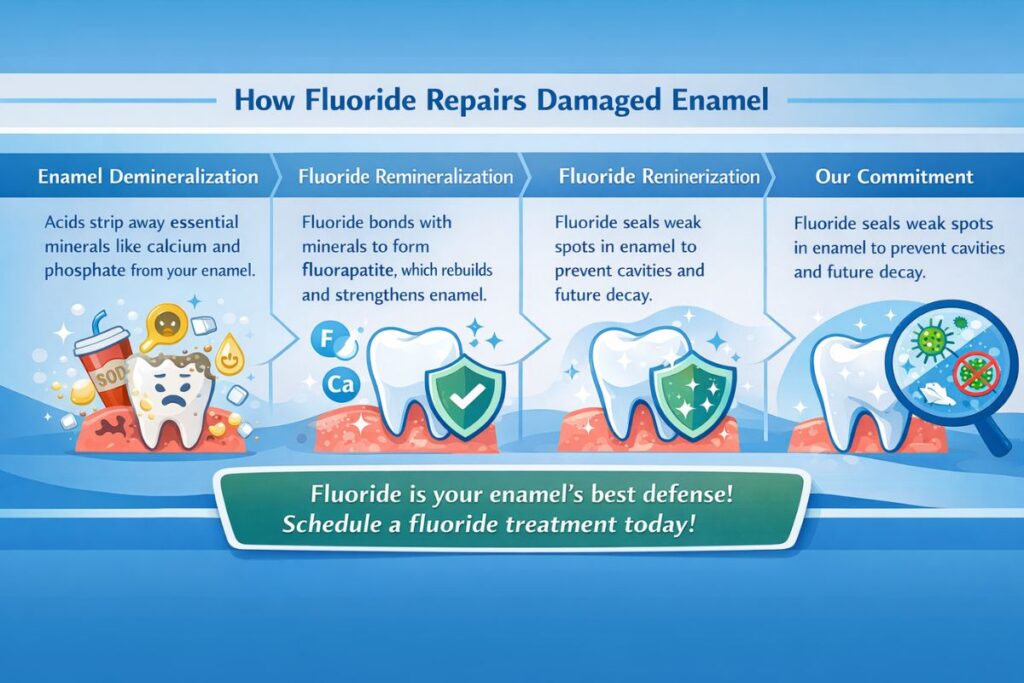
Enamel Demineralization: Every day, your teeth are exposed to acids from the foods and drinks you consume, as well as from bacteria in your mouth. When these acids come into contact with enamel, they cause a process called demineralization, where essential minerals like calcium and phosphate are stripped away from the enamel.
Fluoride’s Remineralization Process: This is where fluoride comes in. Fluoride ions bond with the calcium and phosphate ions in your enamel, forming fluorapatite, a much stronger and more acid-resistant mineral than the original hydroxyapatite. This helps to rebuild the weakened enamel and make it more durable, protecting your teeth from further damage.
Fluoride also has the ability to reverse the early stages of decay. When the enamel begins to soften or demineralize, fluoride can “catch it in time” and promote the rebuilding of mineral structures before a cavity forms.
Preventing Further Damage: One of fluoride’s most valuable benefits is its ability to prevent the progression of cavities. Once fluoride remineralizes enamel, it not only strengthens the existing structure but also helps seal any weak spots that could become areas of decay in the future. By using fluoride regularly, you’re essentially providing a protective barrier against further erosion and decay.
At First-In-Smiles Dentistry, we recommend professional fluoride treatments to ensure that your teeth remain fortified against decay, especially for those at higher risk due to diet, oral hygiene habits, or medical conditions.
Benefits of Fluoride Beyond Enamel Repair
While fluoride’s primary function is to strengthen and repair enamel, it offers several additional benefits for your overall oral health.
Preventing Future Cavities: Regular use of fluoride prevents future cavities by ensuring that enamel is as strong and resistant to decay as possible. The more mineralized your enamel is, the less likely it is to be broken down by acids.
Reducing Tooth Sensitivity: One of the key benefits of fluoride is its ability to reduce tooth sensitivity. As enamel wears down, the dentin beneath becomes exposed, leading to sensitivity. Fluoride helps to reduce this exposure and strengthens the tooth surface, alleviating discomfort.
Long-Term Impact: Using fluoride consistently over time leads to stronger enamel and a healthier mouth overall. By incorporating fluoride into your daily routine, you’re ensuring that your teeth stay protected from decay, even as you age. This contributes to a long-lasting, healthy smile that remains free from cavities and other issues.
At First-In-Smiles Dentistry, we not only provide fluoride treatments but also educate our patients on the importance of fluoride for long-term oral health, ensuring you have the tools to maintain a strong and healthy smile.
Fluoride Treatments: How They Work
Professional Fluoride Treatments: In addition to fluoride found in toothpaste, professional fluoride treatments offer a stronger, more concentrated form of fluoride that’s applied directly to your teeth.
These treatments are typically given in-office, where the fluoride is applied as a gel, foam, or varnish. Professional fluoride treatments in Matthews are especially beneficial for those at high risk of cavities or those who need an extra boost of protection against enamel erosion.
Fluoride in Daily Care: Incorporating fluoride into your daily oral care routine is simple and effective. Make sure to use fluoride toothpaste and consider using fluoride mouth rinses for additional protection. Many communities also have fluoride in the public water supply, which helps to support your enamel health daily.
Children vs. Adults: Fluoride recommendations vary between children and adults. For children, fluoride treatments are especially important as their teeth are still developing. Adults benefit from fluoride too, as it helps to prevent the wear and tear that comes with aging. At First-In-Smiles Dentistry, we tailor fluoride recommendations based on your age, lifestyle, and oral health needs.
In conclusion, fluoride is a vital mineral that helps repair and protect tooth enamel, making it a cornerstone of oral health. Whether it’s remineralizing damaged enamel or preventing further decay, fluoride plays a significant role in ensuring your teeth remain strong and healthy.
If you want to protect your enamel and keep your smile in top condition, schedule a fluoride treatment with First-In-Smiles Dentistry today! Our team is here to help you maintain a beautiful, strong smile for years to come. Don’t wait. Give your teeth the protection they deserve.
FAQs
Can fluoride reverse tooth decay?
Yes, fluoride can reverse early tooth decay by restoring minerals to the enamel, strengthening it and preventing further damage.
How often should I get professional fluoride treatments?
Typically, fluoride treatments are recommended every 6 to 12 months, depending on your oral health needs and the risk of decay.
Can fluoride prevent tooth sensitivity?
Yes, fluoride helps reduce tooth sensitivity by strengthening the enamel and sealing exposed areas, preventing discomfort from hot or cold foods.
Can I use fluoride toothpaste even if I have no cavities?
Yes, fluoride toothpaste is beneficial for everyone, as it strengthens enamel, prevents cavities, and helps protect against decay in the long term.
Is fluoride safe in drinking water?
Yes, fluoride in drinking water is safe and effective in preventing tooth decay, as long as it is within the recommended levels set by health authorities.