704-844-2943
AVAILABLE FOR EMERGENCIESDoes Your Smile Problem Actually Need Invisalign
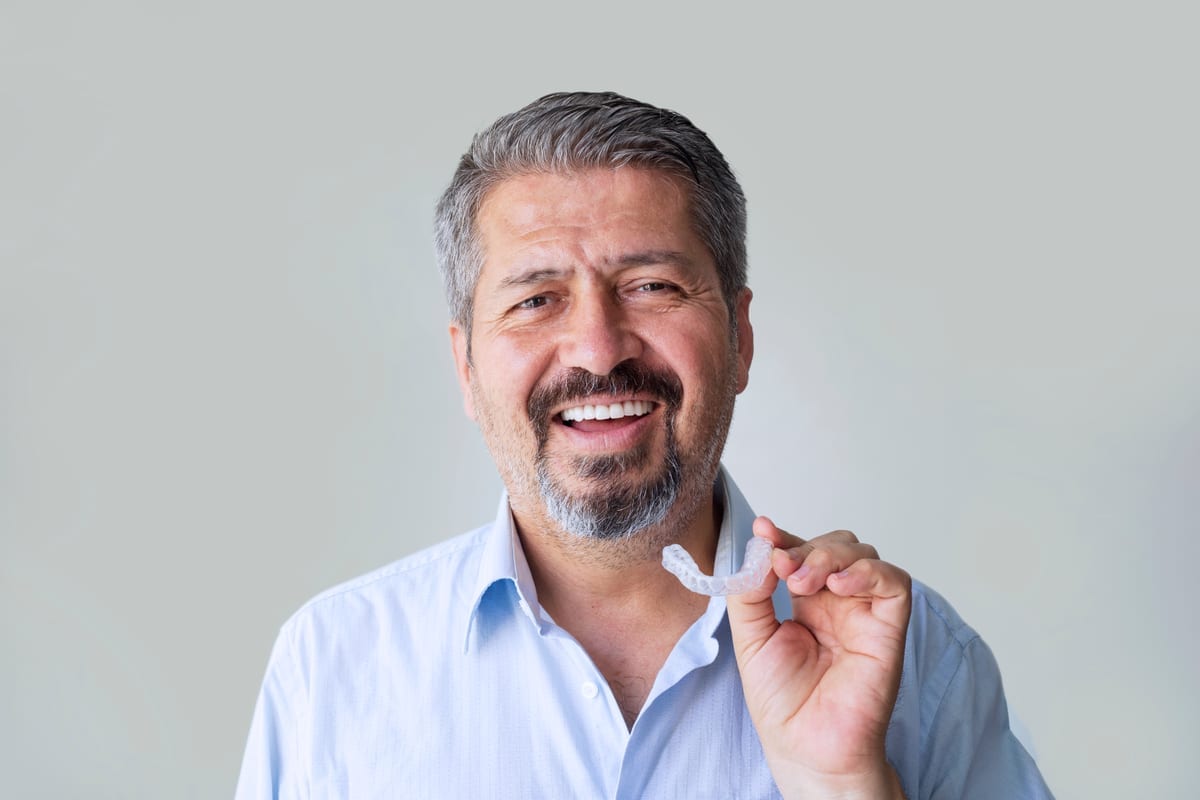
Many patients in Matthews ask the same question before their first consultation: does your smile problem actually need Invisalign in Matthews, or is something else a better fit? It is a smart question. Invisalign works beautifully for a wide range of alignment issues, but it is not the right solution for every case. Understanding what it can and cannot treat helps you make a confident, informed decision before you ever sit in the chair.
At First in Smiles Dentistry, Dr. Hiren Patel takes a thorough, educational approach to every consultation. The goal is never to push a treatment. The goal is to match your specific smile problem with the right solution.
What Invisalign Can Actually Fix in Matthews Patients
Invisalign uses a series of custom clear aligners to gradually shift teeth into their correct positions. The technology has advanced significantly over the past decade. It now handles a broader range of cases than most people expect.
Here are the most common smile problems Invisalign addresses effectively:
- Mild to moderate crowding — teeth that overlap or sit too close together
- Gaps and spacing issues — spaces between teeth that affect bite and appearance
- Overbite — upper front teeth that overlap too far over the lower ones
- Underbite — lower teeth that sit in front of the upper teeth when biting
- Crossbite — upper and lower teeth that do not align side to side
- Open bite — upper and lower teeth that do not meet at all when the mouth is closed
For mild and moderate versions of these issues, Invisalign is often an excellent choice. The aligners are removable, nearly invisible, and comfortable for most patients. Many Matthews adults choose Invisalign specifically because it fits their lifestyle without disrupting it.
When Invisalign May Not Be the Right Answer
Invisalign is not a universal fix. Certain bite problems and tooth positions require more precise, consistent force than clear aligners can reliably deliver. Knowing where those limits fall helps set realistic expectations.
Invisalign is generally less effective or not recommended for:
- Severe crowding — significant misalignment that needs greater mechanical force
- Large overbites or underbites — complex bite corrections that may require jaw repositioning
- Rotated teeth — some rotations, particularly in back teeth, are difficult for aligners to correct fully
- Tooth shape issues — very short, pegged, or round teeth do not grip aligners as effectively
- Prior dental work — bridges or certain restorations can limit aligner movement in that area
In these situations, traditional braces or a combination approach may deliver more predictable results. Dr. Patel will review your records carefully and give you an honest recommendation. The priority is always your long-term oral health and bite function.
How Dr. Patel Evaluates Your Candidacy in Matthews
No two smiles are identical. That is why a proper Invisalign evaluation goes well beyond a quick look at your teeth. Dr. Patel uses digital scans, X-rays, and a full bite analysis to understand what is happening structurally.
During your consultation at First in Smiles Dentistry, the evaluation covers several key areas. Dr. Patel reviews your bite relationship, the degree of crowding or spacing, the health of your gums and bone, and any existing dental work that could affect treatment. This comprehensive picture determines whether Invisalign, traditional orthodontics, or another path makes the most sense for you.
Sometimes patients come in thinking they need extensive orthodontic treatment, but a simpler solution exists. In other cases, the problem is more complex than it appears. Either way, you leave with a clear understanding of your options and realistic timelines.
It is also worth noting that some alignment problems pair well with restorative solutions. For example, a patient with minor spacing may benefit from Dental Crowns Matthews rather than months of orthodontic treatment. Dr. Patel explores every appropriate option before making a recommendation.
Invisalign Versus Traditional Braces — Which Fits Your Life?
Even when both options could correct your smile, lifestyle factors often influence the final choice. Invisalign aligners are removable for eating, brushing, and special occasions. That flexibility appeals to many working adults and older teens in Matthews.
However, that same flexibility requires discipline. Aligners must be worn 20 to 22 hours per day to stay on track. Patients who frequently remove them or forget to switch to new trays on schedule will experience slower, less predictable results. Compliance is a critical part of success with Invisalign.
Traditional braces stay fixed to the teeth. There is no risk of misplacing them or skipping wear time. For some patients, especially those with more complex issues or younger teenagers who may struggle with the responsibility of removable aligners, braces offer a more reliable outcome. Dr. Patel discusses these practical realities openly during your appointment so you can choose what genuinely fits your situation.
For patients who want to improve aesthetics alongside alignment, treatments like Dental Sealants Matthews can support overall oral health while Invisalign progresses. A complete smile plan addresses both function and appearance together.
Taking the Next Step Toward a Straighter Smile
Understanding whether you are a good candidate is the most important first step. Do not rely on a self-diagnosis from an online quiz or a social media ad. A qualified evaluation by a dentist who understands your full oral health picture makes all the difference.
Dr. Hiren Patel and the team at First in Smiles Dentistry have helped many Matthews patients find clarity about their treatment options. Whether Invisalign turns out to be the right path or not, you will leave your consultation knowing exactly what your smile needs and why. Book Now to schedule your appointment with our team.
Frequently Asked Questions
How do I know if my crowding is too severe for Invisalign?
Only a clinical evaluation can determine the severity of your crowding. Dr. Patel uses digital scans and X-rays to measure the degree of misalignment. Mild to moderate crowding typically responds well to Invisalign. Severe crowding may require traditional braces or a combination approach for the most predictable results.
Can Invisalign fix an overbite or underbite in Matthews patients?
Invisalign can address mild to moderate overbites and underbites effectively. However, significant bite discrepancies — especially those involving jaw position — may need traditional orthodontic treatment or additional intervention. Dr. Patel will review your bite relationship during your consultation and explain what correction is realistic with each option.
What happens if I stop wearing my aligners consistently?
Inconsistent wear is one of the most common reasons Invisalign treatment takes longer than planned. Aligners require 20 to 22 hours of daily wear to apply the steady pressure needed to move teeth. Gaps in wear allow teeth to drift back slightly, which can slow progress or require additional aligner stages.
Is Invisalign suitable for teenagers as well as adults?
Yes, Invisalign offers a version specifically designed for teens called Invisalign Teen. It includes compliance indicators and additional replacement aligners. However, teenagers who struggle with responsibility for removable appliances may achieve more consistent results with traditional braces. Dr. Patel helps families weigh both options honestly.
How long does an Invisalign consultation take at First in Smiles Dentistry?
A thorough Invisalign consultation at First in Smiles Dentistry typically takes about 60 minutes. That time includes digital scans, a bite and alignment assessment, a review of your dental and medical history, and a full discussion of your treatment options. You will leave with a clear picture of whether Invisalign is the right fit for your smile.